Slab Foundation Moisture in Humble TX: Signs & Solutions
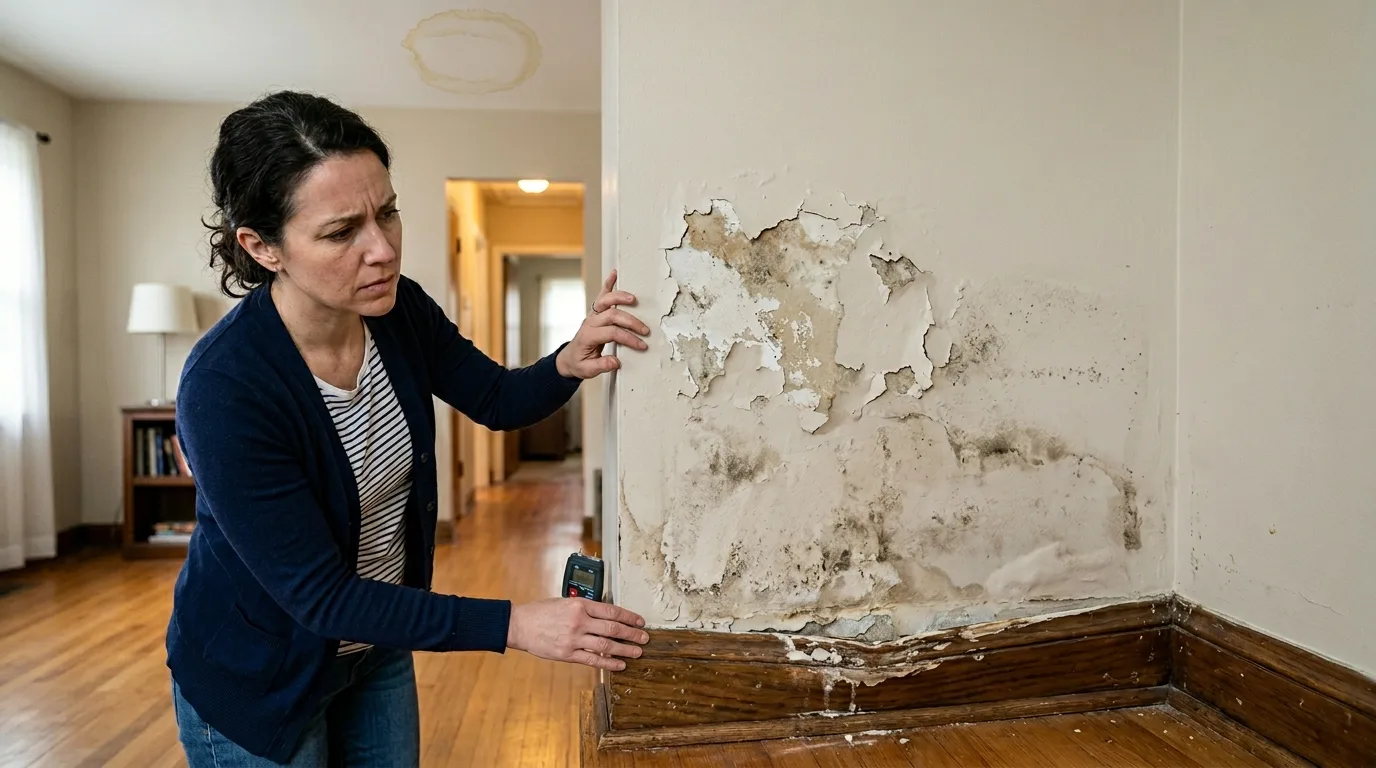
Slab foundation moisture in Humble, TX rarely announces itself with visible pooling water. It announces itself with a floor that feels warm in one spot, a water bill that climbed $30 last month without explanation, a faint musty odor from a room with no obvious water source, or flooring that buckles and separates months after what appeared to be a dry season. By the time any of these signs appear, moisture has typically been working inside or below your slab for weeks or longer. This guide explains how Humble’s specific soil conditions create ongoing slab foundation moisture risk, how to identify a slab leak before it becomes a full water damage emergency, and what the restoration process looks like when hidden moisture is found. See also the gumbo clay foundation water damage guide for the full soil science behind Humble’s foundation movement patterns.
Slab Moisture or Slab Leak in Humble? Call for Assessment
Thermal imaging inspection and water damage restoration in Harris County. Call (877) 698-1311.
Why Humble’s Gumbo Clay Creates Persistent Slab Foundation Moisture
The expansive Vertisol clay soils that underlie most of Humble and northeastern Harris County interact with concrete slab foundations in ways that create chronic moisture exposure distinct from rainfall flooding. The USDA NRCS Web Soil Survey classifies the predominant soil series in Harris County as Houston Black and League clays — both highly expansive Vertisols that can shrink and swell by several inches between wet and dry seasons.
This shrink-swell behavior creates two moisture pathways into slab-foundation homes. During wet seasons, clay expansion pushes against the slab perimeter and forces ground-level water through the gap between the slab edge and the soil surface — a pathway that is particularly active after the kind of heavy rainfall events that Harris County experiences repeatedly through hurricane season. During dry seasons, clay shrinkage pulls away from the slab, creating open voids along the foundation perimeter that allow air movement and, when rain returns, rapid water infiltration through pathways that weren’t present during the last wet season.
The combination produces a chronic cycle: seasonal moisture stress on the foundation, cumulative crack formation in the slab over years, and an increasing number of pathways for moisture migration from below the slab into the occupied structure above. Humble homeowners with slab foundations are not dealing with a one-time event — they are managing an ongoing relationship between their foundation and the soil beneath it.
Warning Signs of Slab Foundation Moisture in Humble Homes
Identifying slab foundation moisture requires knowing what to look for across multiple systems in the home:
Unexplained water bill increases: A sudden or gradual increase in monthly water consumption without a change in household habits is one of the most reliable indicators of a slab leak. A slow slab leak can add tens of thousands of gallons to monthly consumption before causing any visible interior damage. Check the water meter before and after a 30-minute period of no water use — if the meter moves during that period, water is flowing somewhere in the system.
Warm or hot spots on flooring: Hot water supply lines run beneath the slab in most Humble homes. When a hot water line develops a slab leak, the escaping hot water warms the concrete above it — creating a detectable temperature differential at the floor surface. Barefoot walking on tile or hardwood can identify these warm zones; professional thermal imaging inspection provides precise mapping of the moisture pathway.
Mold or musty odor from below flooring: Mold that appears under carpeting, under vinyl plank flooring, or along baseboards without any visible water source above is frequently the result of moisture migrating upward through concrete micro-fractures. Concrete is porous enough that sustained moisture below the slab can push water vapor through in quantities sufficient to sustain mold growth at the floor surface level.
Flooring separation, buckling, or cupping: Wood and laminate flooring that swells, buckles, or separates at joints is absorbing moisture from below. This often happens in a localized area — corresponding to where moisture is penetrating the slab — rather than uniformly across a floor plane.
Foundation cracks at slab edge: Visible cracks at the junction between the concrete slab and the exterior soil surface, or cracks in the interior drywall at corners and door frames, indicate foundation movement that can be opening new moisture pathways.
How Slab Leaks Are Detected
Slab leak detection has advanced significantly from the days of jack-hammering suspected locations. Current professional detection uses:
Thermal imaging inspection: Infrared cameras detect temperature differentials at the floor surface that correspond to moisture migration pathways and hot water line leaks. This non-destructive method identifies the most probable leak location before any concrete work begins, reducing the amount of concrete that needs to be opened.
Acoustic leak detection: Specialized microphones detect the sound of water escaping under pressure inside a pipe buried beneath concrete. Acoustic detection can triangulate leak location to within a few inches, further reducing the concrete access required.
Water meter isolation testing: By shutting off water supply to specific fixture groups and monitoring the meter, technicians can determine whether a leak is in the hot or cold system — narrowing the area to be investigated before deploying imaging or acoustic equipment.
Once a slab leak is precisely located, the restoration path has two components: the plumbing repair (cutting concrete, repairing or rerouting the damaged pipe, and restoring the concrete) and the water damage restoration of any moisture that has migrated into the structure above the slab.
Slab Leak Water Damage Restoration in Humble, TX
Thermal imaging, moisture mapping, and structural drying. Call (877) 698-1311.
Restoration After Slab Foundation Moisture
The water damage restoration process for slab-foundation moisture events follows a specific sequence that differs from surface flooding:
Water extraction of standing moisture: If the slab leak has produced standing water above the slab (in the case of cold water supply line failures), immediate extraction is required before any drying can begin. This step comes before the plumbing repair in most scenarios — you are reducing the active moisture load, not waiting for the leak to be fixed first.
Flooring removal: Unlike surface flooding where some flooring may be salvageable if dried quickly, flooring over an active slab leak is virtually always removed — both to allow verification of the moisture extent beneath and because the flooring has been repeatedly wetted from below. Carpet, pad, and wood flooring are typically non-salvageable once slab moisture has penetrated from below.
Structural drying of the slab and adjacent wall assemblies: After the plumbing repair is complete, the concrete itself must be dried before new flooring is installed. Wet concrete retains moisture that will cause replacement flooring to fail if new materials are installed over an insufficiently dried slab. Industrial dehumidification equipment runs in sealed conditions to drive down the moisture content of the concrete and the wall base plates before reconstruction begins.
Moisture verification to dry standard: Final moisture readings of the concrete slab and wall assemblies verify that IICRC dry standard has been achieved before reconstruction. Without this verification step, flooring and drywall replacement is premature — and the moisture left behind will drive mold growth and flooring failure within weeks.
For Humble homeowners concerned about mold growth from hidden slab moisture, post-remediation air quality testing confirms that the drying and any necessary mold remediation has achieved clearance before the home is enclosed.
Frequently Asked Questions
Does homeowners insurance cover slab leak water damage in Humble?
Standard homeowners policies typically cover sudden and accidental water damage from slab leaks — the water damage above the slab and the cost of accessing the leak (tearing up concrete) — but often exclude the cost of repairing the pipe itself. Slow leaks that developed over time may be denied under “gradual damage” exclusions. The distinction between sudden and gradual damage matters: a pipe that failed suddenly due to corrosion or physical stress is typically covered; a pipe that dripped slowly over months may not be. See the insurance guide for water damage claims in Humble for documentation specifics.
How long does slab foundation moisture restoration take in Humble?
The timeline depends on the scope of moisture intrusion. A single-room slab leak with contained moisture typically requires 3–5 days for extraction and structural drying verification, followed by 1–2 weeks for plumbing repair and reconstruction. More extensive moisture events — where water has migrated into multiple rooms or through wall assemblies — extend the drying phase accordingly. Humble’s humid subtropical climate makes extended dehumidification more challenging than in drier climates: the equipment must work against ambient outdoor humidity that re-enters through any unsealed opening. Professional crews manage this by running equipment in sealed or semi-sealed conditions. See the complete water damage restoration guide for a full timeline reference.
Can I detect a slab leak myself before calling a professional?
The water meter test is the most accessible DIY check: turn off all water fixtures and appliances in the home, locate the water meter at the street, and observe the meter face for 30 minutes. If the meter’s sweep hand or digital display shows movement during this period, water is flowing somewhere in your supply system. This doesn’t confirm a slab leak (it could be a toilet flapper or supply line leak), but it confirms active water loss and warrants calling for a professional assessment to locate the source before the water damage spreads.
Slab Moisture Assessment and Restoration in Humble, TX
Call Humble Water Damage Restoration at (877) 698-1311 — we find what others miss.
Related reading: