Mold After Water Damage: Humble TX Climate & Mold Growth
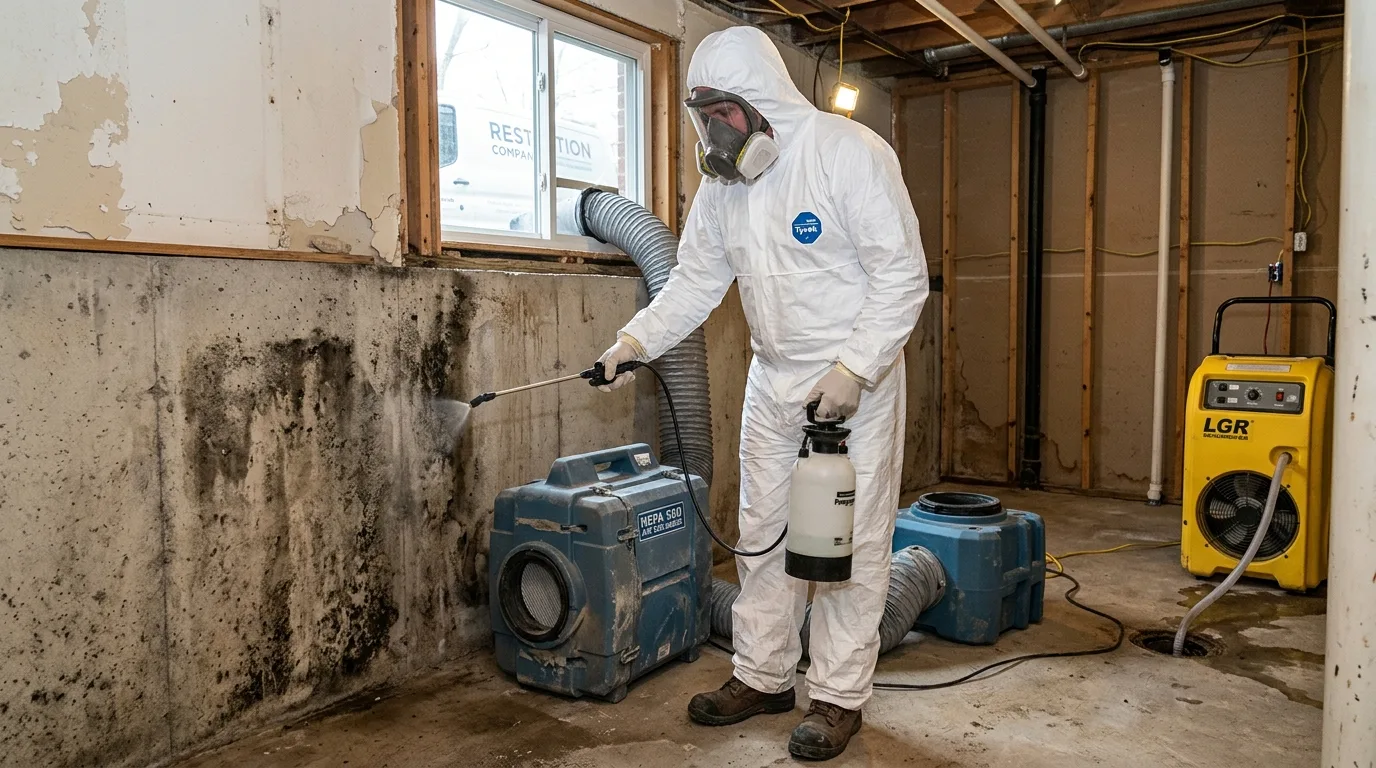
By the time you smell mold in your Humble home after water damage, it has already established itself inside wall cavities, behind baseboards, and potentially in your HVAC system. That musty odor signals active mold growth — not a future risk, but a present one that is spreading every day. In this post, we explain how Humble’s climate accelerates mold growth beyond the typical timeframes, what warning signs to watch for, and when professional mold remediation is necessary. For the full restoration picture, see the complete water damage restoration guide and the sewage cleanup guide for Category 3 mold scenarios.
Mold in Your Humble Home? Get a Professional Assessment
IICRC-certified mold detection and remediation. Serving all of Harris County. Call (877) 698-1311.
Why Humble’s Climate Makes Mold a Special Risk
Standard water damage guidance — which dates from testing in temperate climates — often states that mold growth becomes a risk after 48–72 hours of moisture exposure. In Humble’s humid subtropical environment, that window is meaningfully shorter. The three conditions that support mold growth are moisture, an organic food source (drywall paper, wood framing, carpet backing), and temperature above roughly 40°F. Humble satisfies all three conditions, year-round.
Summer temperatures in Humble regularly exceed 95°F, with relative humidity frequently above 70% even between storm events. These conditions accelerate fungal metabolic rates — mold that might take 72 hours to establish in a 68°F climate can colonize in as little as 24 hours in Humble’s summer environment. Fall Creek and Balmoral homeowners who have experienced flooding know this firsthand: mold visible behind baseboards and under flooring within days of a flooding event is not unusual in August and September.
The combination of Humble’s clay soil, high water table, and hurricane-driven flooding events means that many homes experience repeated moisture exposure — not just single events. Each exposure that is not completely and professionally remediated leaves residual mold that activates with the next moisture event, creating an escalating cycle that eventually requires much more extensive remediation.
Types of Mold Common in Humid Texas Climates
Cladosporium: One of the most common indoor molds following water damage. Appears as black, green, or brown spots on walls, windows, and organic materials. Causes respiratory irritation and allergic reactions. Grows readily on drywall paper and wood in Humble’s climate.
Penicillium/Aspergillus: Often appears blue-green in color. Grows quickly in humid conditions and is commonly found in HVAC systems and behind water-damaged walls. Can produce mycotoxins in certain species.
Stachybotrys chartarum (black mold): The most notorious mold type — grows specifically on cellulose-rich materials (drywall paper, wood) that have been wet for extended periods (weeks, not days). Less common than Cladosporium in early-stage water damage events; more common in homes where water damage was not promptly or completely remediated.
Chaetomium: A fuzzy, brown-to-black mold found frequently in water-damaged building materials. Produces a musty odor distinctive from other mold types. Common in post-flood Harris County homes.
The Mold Growth Timeline in Humble
Understanding this timeline helps homeowners make urgent decisions after water damage:
0–24 hours: Water saturates materials. Mold spores (present everywhere in Humble’s outdoor environment) begin to sense moisture. No visible growth yet, but the colonization clock has started.
24–48 hours: In Humble’s warm conditions (80°F+), early mold germination begins on organic materials. Not yet visible to the eye. Moisture meter readings still provide reliable early warning.
48–72 hours: Mold mycelium (root-like filaments) begin penetrating drywall paper and wood grain. Still not visible but beginning to cause structural material degradation. This is the point where professional drying must be verified complete.
72–120 hours: Visible mold colonies may appear as discoloration, fuzzy growth, or staining. MVOC (microbial volatile organic compounds) production begins — the source of the musty odor. HVAC system may begin circulating spores.
Beyond 5 days: Mold is now established and spreading. Surface cleaning is ineffective; professional containment and remediation protocols required.
Warning Signs of Mold After Water Damage
- Musty or earthy odor — especially from closed rooms, HVAC vents, or beneath flooring
- Visible discoloration on walls, ceilings, or baseboards — black, green, or white fuzzy growth
- Staining around HVAC registers — indicates mold in ductwork being distributed by air circulation
- Soft or spongy drywall — indicates moisture retention that will inevitably lead to mold
- Peeling or bubbling paint — a sign of moisture behind the wall surface
- Persistent respiratory symptoms — unexplained coughing, sneezing, or respiratory irritation in family members
When Professional Mold Remediation Is Required
EPA guidelines recommend professional remediation for mold infestations larger than 10 square feet (roughly 3 feet × 3 feet). But for Humble homeowners, the practical recommendation is simpler: any mold detected following a water damage event warrants professional assessment, because visible mold is almost always the surface indication of a larger hidden infestation in wall cavities.
DIY mold treatment with bleach spray kills surface mold but does not address mycelium that has penetrated into drywall paper or wood grain — and in Humble’s humid climate, that surface-only treatment provides only days of relief before regrowth occurs. Professional remediation uses containment, HEPA filtration, removal of infested materials, EPA-registered antimicrobial treatments, and post-remediation clearance testing to verify the problem is actually resolved.
Homes throughout Harris County that experienced incomplete post-Harvey mold remediation continue to have recurring mold issues years after the storm — evidence of what inadequate initial response ultimately costs.
Frequently Asked Questions
How do I know if mold is in my walls after water damage in Humble?
Musty odor from walls or closed rooms is the most reliable indicator of hidden mold. A professional mold inspection using moisture meters and thermal imaging can locate moisture pockets in wall cavities even without cutting into walls. Air quality testing can detect elevated mold spore concentrations. If you had water damage that was not professionally dried and verified complete, assume mold assessment is necessary.
Can I stay in my Humble home during mold remediation?
For small-area mold remediation with proper containment, homeowners can often remain in unaffected parts of the home. For mold remediation affecting multiple rooms, HVAC systems, or involving Category 3 (black mold), temporary relocation for the duration of the remediation is strongly recommended, particularly for children, elderly family members, or anyone with respiratory conditions.
How long does mold remediation take in Humble’s climate?
Professional mold remediation in Humble takes 2–5 days for the containment and removal phase, followed by 1–2 days for post-remediation clearance testing. Reconstruction of removed drywall and structural materials adds 1–3 weeks. The total timeline from mold assessment to restored home is typically 2–4 weeks for average residential cases.
Mold Concerns After Water Damage in Humble?
IICRC-certified mold remediation. We verify results with post-remediation testing. Call (877) 698-1311.
Related reading: