How Humble's Clay Soil Causes Foundation Water Damage
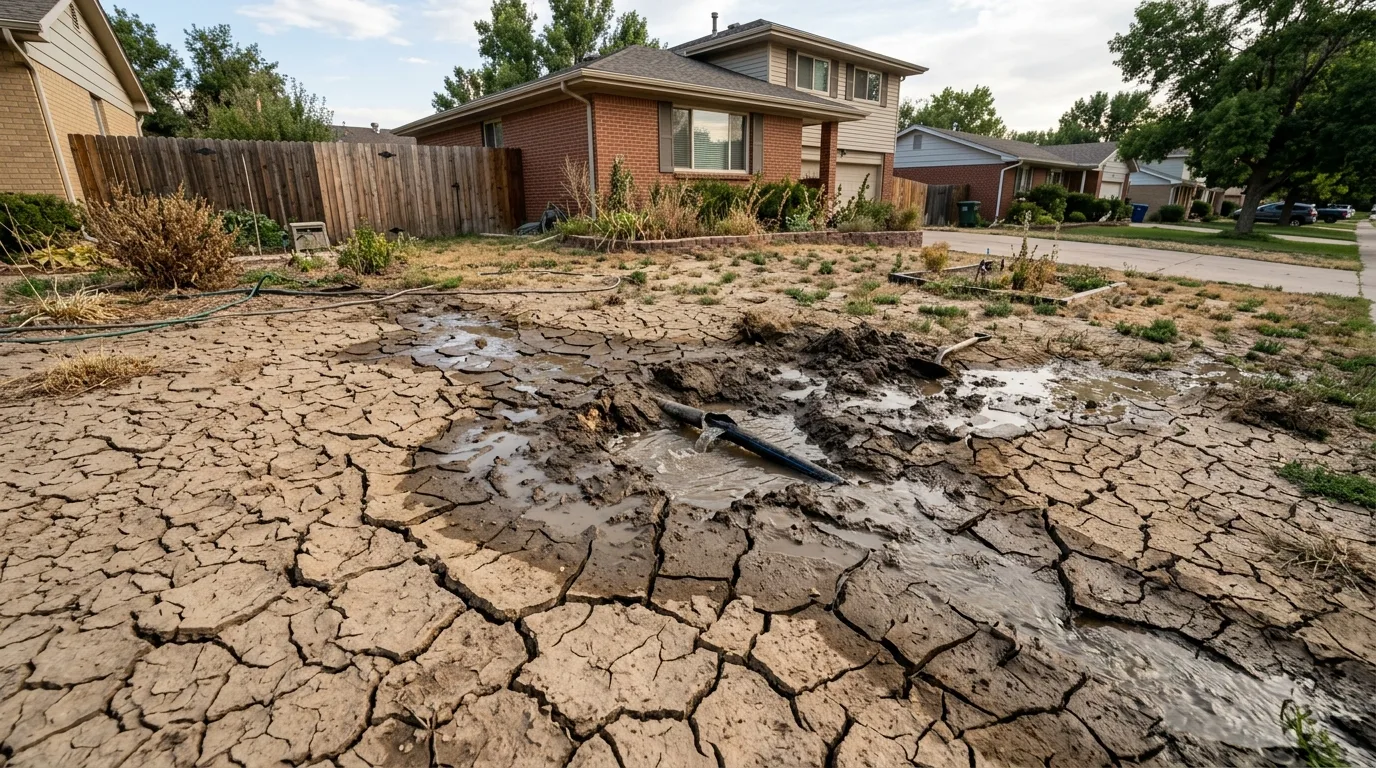
Most Humble homeowners know their yard turns into a mud pit after heavy rain. Fewer realize that the same gumbo clay soil beneath their feet is actively working against the integrity of their foundation — creating water intrusion pathways, causing slab cracking, and exposing structural wood to year-round moisture pressure. In this post, we explain the mechanism by which Humble’s expansive clay soil causes water damage, and what homeowners can do about it. See also our guides on slab foundation moisture signs and solutions and the complete water damage restoration guide for Humble.
Foundation Moisture Concerns in Humble? Get a Free Assessment
We identify and address water intrusion from soil moisture to structural damage. Call (877) 698-1311.
Why Humble’s Soil Is So Different
The dominant soil type across northeast Harris County is Vertisol clay — locally called gumbo clay — an expansive soil type that behaves dramatically differently from the sandy or loamy soils found in much of the rest of Texas. Vertisols get their name from the vertical mixing that occurs as the soil shrinks and swells: when wet, the clay expands by as much as 40% of its dry volume; when it dries out, it contracts and cracks, leaving fissures that can be inches wide and feet deep.
This expansion-contraction cycle occurs on a seasonal basis throughout Harris County. During Humble’s rainy periods — particularly the June–November storm season and the March–May thunderstorm season — the clay swells. During drier winter months and any drought conditions, the clay contracts. This repeated mechanical stress is applied directly to anything embedded in or resting on the soil: foundation piers, slab edges, underground utilities, and perimeter footing systems.
The year-round high water table in northeast Harris County adds a second dimension to the problem. Even during dry seasons, groundwater beneath Humble’s clay soil remains close to the surface — in some areas of Harris County, the seasonal high water table is within just a few feet of grade. This persistent groundwater creates upward hydrostatic pressure against concrete slabs and crawlspace foundations, essentially pushing moisture up through any crack, joint, or unsealed penetration in the foundation.
How Clay Soil Creates Water Intrusion
The connection between soil movement and water intrusion works through several mechanisms that compound each other over time.
Slab cracking from differential movement: As clay expands and contracts unevenly beneath a concrete slab, different areas of the slab experience different amounts of support. Areas over more saturated clay lift slightly; areas over drying clay settle. This differential movement causes concrete slabs to crack — not from structural failure but from the relentless mechanical stress of soil movement. Once cracked, the slab provides a water intrusion pathway: groundwater under hydrostatic pressure finds the crack and begins migrating upward, saturating flooring from below without any obvious surface water source.
Perimeter beam separation: Concrete slab homes in Humble are typically built with a continuous perimeter beam — a deeper concrete edge that surrounds the slab. As clay swells and contracts, the soil at the perimeter of the slab moves more dramatically than soil at the center (because exterior perimeter soil has more exposure to weather and moisture variability). This differential movement pulls at the perimeter beam, creating micro-gaps between the beam and the slab interior where water can migrate.
Crawlspace exposure: Older Humble homes on pier-and-beam foundations have crawlspaces that sit directly above the clay soil. As the water table rises during heavy rainfall, it can actually intrude into these crawlspaces through the ground surface — no crack needed. The saturated clay becomes essentially waterlogged, and in severe cases the water table rises to the crawlspace floor level.
What This Looks Like in a Humble Home
Homeowners who dismiss these processes as abstract eventually encounter them concretely — usually in the form of buckled hardwood floors, persistent musty odors from beneath living areas, efflorescence on slab edges, or mold discovered behind baseboards. These are not cosmetic problems; they are evidence of ongoing water intrusion that will continue to damage structural materials until the moisture pathway is addressed.
In Kingwood and other neighborhoods built on particularly active clay soil areas of Harris County, homeowners sometimes discover that their floors have developed a slight crown or dish — higher at the center, lower at the edges — as the perimeter of the slab settles relative to the center. This classic sign of perimeter foundation movement is a direct result of clay soil moisture differential and signals that the foundation has experienced enough movement to create gaps and cracks in the slab assembly.
The thermal imaging inspection step that Humble Water Damage Restoration performs on every job is particularly valuable in these situations: thermal imaging reveals moisture patterns that follow the cracks and pathways created by soil movement, allowing us to map the actual migration routes of water rather than assuming we’ve found all sources from surface observations alone.
Cost Implications of Clay-Driven Water Damage
The connection between soil conditions and water damage costs in Humble is direct: water damage that originates from foundation-level soil moisture intrusion is often ongoing rather than episodic. Unlike a burst pipe — a single event with a clear start and end — clay soil moisture intrusion recurs with every wet season. Without addressing the root cause (sealing the slab, encapsulating the crawlspace, improving drainage), the restoration of materials will be followed by re-wetting, and the restoration cost will recur.
Water extraction in Humble runs $1,200–$8,500 for acute events; addressing chronic moisture intrusion from soil conditions adds crawlspace encapsulation costs of $3,000–$8,000, potential slab sealing costs, and foundation drainage improvements. These preventive costs, however, are almost always less than the cumulative cost of repeated material replacement cycles.
Frequently Asked Questions
Can I fix clay soil water intrusion myself?
Some homeowners attempt to address clay soil water intrusion with surface-applied sealers on concrete slabs or landscaping grading improvements. These measures can reduce but rarely eliminate clay soil moisture intrusion in Humble’s high-water-table environment. Professional assessment is recommended before spending money on solutions that may not address the actual moisture pathway.
Does homeowners insurance cover clay soil water intrusion damage?
Standard homeowners insurance typically covers sudden and accidental water damage — not gradual moisture intrusion from soil conditions. Clay soil moisture damage is considered a maintenance issue by most insurers and is generally excluded from coverage. However, if acute flooding accelerates or exposes underlying clay-related damage, portions of the claim may be covered. We help homeowners understand the coverage question on every job.
How do I know if my Humble home has clay soil moisture intrusion?
Warning signs include: musty odors from floors or crawlspaces, buckling hardwood floors, white efflorescence deposits on slab edges or foundation walls, tile grout cracking, and gaps appearing between baseboards and flooring. A professional moisture assessment with thermal imaging is the most accurate diagnostic tool available for Humble-area homeowners.
Suspected Foundation Moisture in Your Humble Home?
Humble Water Damage Restoration provides professional moisture assessment and crawlspace inspections. Call (877) 698-1311.
Related reading: