Hurricane Harvey in Humble: What We Learned About Flood Recovery
In August 2017, Tropical Storm Harvey stalled over southeast Texas for four days and delivered more than 50 inches of rain to parts of Harris County — the most rainfall ever recorded from a single storm in US history. For Humble homeowners and the tens of thousands of residents in adjacent Kingwood, it wasn’t just the storm of a lifetime; it was a lesson in how quickly water damage compounds when systems are overwhelmed and restoration can’t begin. In this post, we examine what Harvey taught us about flood recovery and what Lake Houston homeowners need to know about ongoing flood risk.
Storm Flooding Your Home? We Respond 24/7
Emergency flood cleanup and structural drying across Humble and Harris County. Call (877) 698-1311.
Why Harvey Hit Humble So Hard
The confluence of the West and East Forks of the San Jacinto River sits immediately upstream of Humble, with Lake Houston serving as the region’s primary flood control reservoir. During Harvey, that reservoir reached capacity — and the US Army Corps of Engineers was forced to open the Lake Houston spillway to prevent dam failure, releasing controlled floods into already-saturated downstream communities.
Kingwood, which lies between the reservoir and Humble, bore the brunt of these releases. Neighborhoods that had never flooded before found themselves under several feet of water not from direct rainfall alone, but from the combination of direct storm rainfall and controlled spillway releases. This double-flood scenario — rain from above and water from the reservoir below — was something most Harris County homeowners had not planned for and most standard flood maps did not predict.
The clay-heavy soil throughout northeast Harris County compounded the problem. Humble’s gumbo clay soil, which expands dramatically when wet, was already fully saturated within the first 24 hours of Harvey’s rainfall. Once saturated, the soil could accept no additional moisture — every additional inch of rain became direct surface runoff rather than percolating into the ground, accelerating the rate of flooding and extending the duration of inundation.
What Harvey Taught Us About Flood Recovery Timing
The most consistent lesson from Harvey was that timing determined outcomes more than almost any other factor. Homeowners who began flood cleanup within 24–48 hours of waters receding had dramatically better long-term results than those who waited.
The critical threshold is 72 hours. Wood structural members that stay saturated beyond 72 hours begin to lose structural integrity — joists, subfloor sheathing, and wall framing that looked intact to the eye were measurably weakened. Drywall that stayed wet past 48 hours could not be saved and required full replacement. Most critically, mold established itself in homes with delayed cleanup within days of flooding, turning what could have been a 3-week restoration into a 6-week remediation project.
During Harvey, many Humble and Kingwood homeowners waited days before restoration teams could reach them — the scale of the disaster overwhelmed local and regional restoration capacity. That delay meant mold was virtually universal in homes that flooded. Post-Harvey, the lesson was clear: maintaining a relationship with a restoration company before a disaster strikes — so you’re a priority call when the phones light up — is one of the most important preparations a Humble-area homeowner can make.
The Insurance Complexity Harvey Revealed
Harvey also exposed the insurance gap that affects many Harris County homeowners. Standard homeowners insurance covers sudden and accidental water damage from internal sources but not rising floodwater. NFIP (National Flood Insurance Program) covers rising floodwater but has coverage limits ($250,000 for structure, $100,000 for contents) that fell short of many Humble and Kingwood homeowners’ total losses.
The paperwork burden was enormous. Homeowners with both NFIP and homeowners insurance needed to coordinate two separate adjusters with different documentation requirements. Homeowners without flood insurance faced out-of-pocket restoration costs or FEMA Individual Assistance grants that rarely covered full replacement costs.
The lesson: Humble and Kingwood homeowners in any FEMA-mapped Special Flood Hazard Area should carry NFIP flood insurance as an absolute minimum. For higher-value homes, private flood insurance that exceeds NFIP limits should be considered. And for any flood damage claim, having a restoration contractor who understands NFIP documentation requirements from day one is not a convenience — it’s a significant financial advantage.
How Flood Recovery Has Changed Since Harvey
Professional flood restoration practices evolved significantly in the aftermath of Harvey. The scale of the disaster required adaptation: larger companies deployed resources regionally, and smaller local firms learned to triage by severity rather than geography.
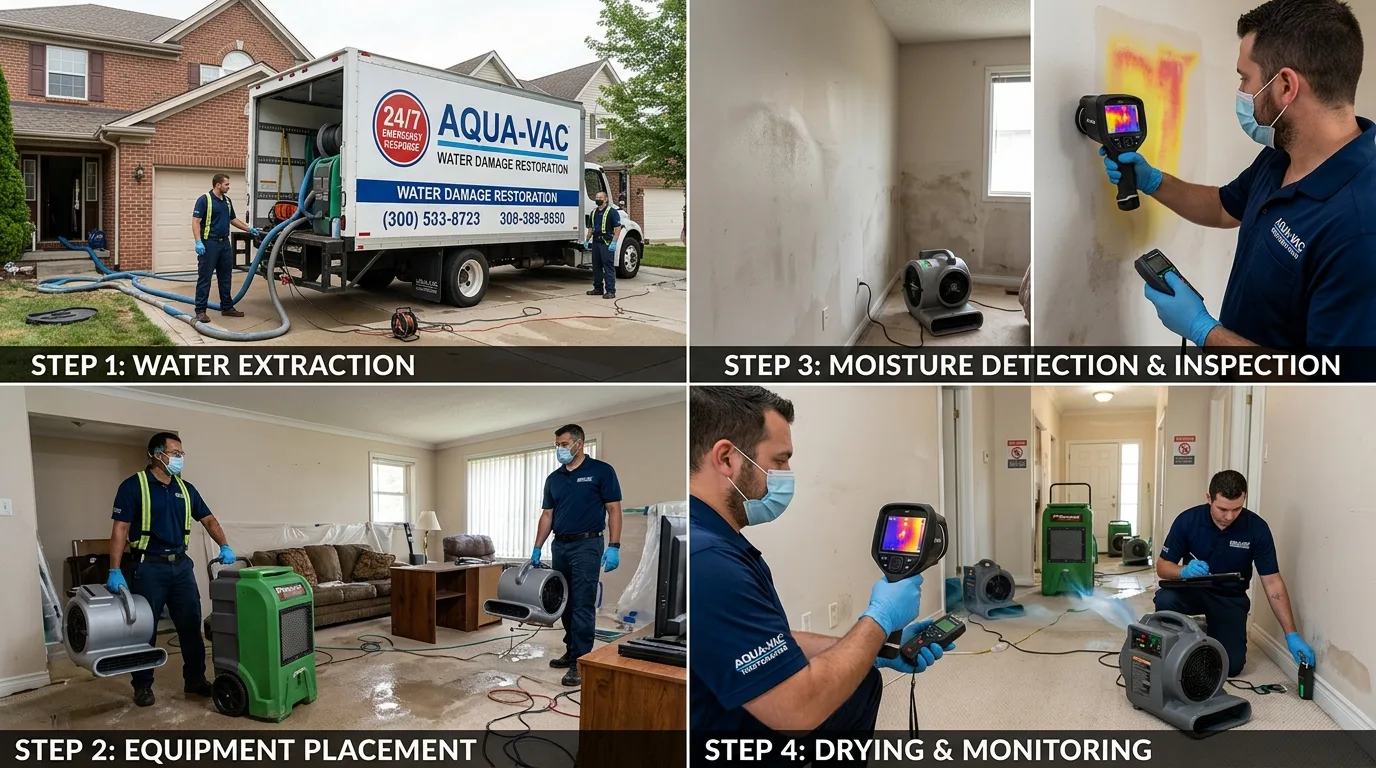
Thermal imaging became standard practice across the industry during and after Harvey. The invisible moisture left inside wall cavities and under flooring by inadequate post-Harvey drying caused widespread mold problems 30, 60, and 90 days after initial cleanup — leading insurers and homeowners alike to demand verification that structural drying was genuinely complete, not just visually complete. Thermal imaging provides that verification.
NFIP-specific documentation protocols became more rigorous. Adjusters working Harvey claims required detailed moisture mapping, material removal logs, and equipment placement records — the same documentation now expected by NFIP adjusters for any Harris County flood claim.
Frequently Asked Questions
Does Harvey-era flooding affect my property’s current value or insurability?
Properties that flooded during Harvey are on record with FEMA and may face higher NFIP flood insurance premiums under FEMA’s Risk Rating 2.0 program. Harris County properties that flooded multiple times may qualify for FEMA’s Repetitive Loss or Severe Repetitive Loss designations, which carry additional insurance implications. A licensed insurance agent familiar with Harris County can advise on current premium rates and available mitigation measures that can reduce premiums.
What should I look for to identify incomplete Harvey-era restoration in a Humble home I’m buying?
In any Humble or Kingwood home that flooded during Harvey, look for: efflorescence (white mineral deposits) on concrete slab edges, warped or buckling baseboards, hollow-sounding drywall, musty odors in enclosed spaces, and staining at or near the pre-flood waterline. A professional mold inspection and thermal imaging sweep before purchase is strongly recommended for any Harris County home that flooded during Harvey or Imelda.
Is Humble likely to flood like Harvey again?
Harris County has experienced multiple 500-year flood events in the last decade — Harvey in 2017, Tax Day Flood in 2016, Memorial Day Flood in 2015, and Tropical Storm Imelda in 2019. While no storm will replicate Harvey exactly, Humble’s geographic position near the San Jacinto watershed and Lake Houston means serious flooding risk in any major tropical storm that stalls over the region. The Lake Houston flood risk guide covers ongoing flood management in detail.
Preparing for the Next Storm? Start with a Free Assessment
Humble Water Damage Restoration helps Harris County homeowners prepare and respond. Call (877) 698-1311.
Related reading: