Water Damage Atascocita TX: Lake Houston Proximity Risks
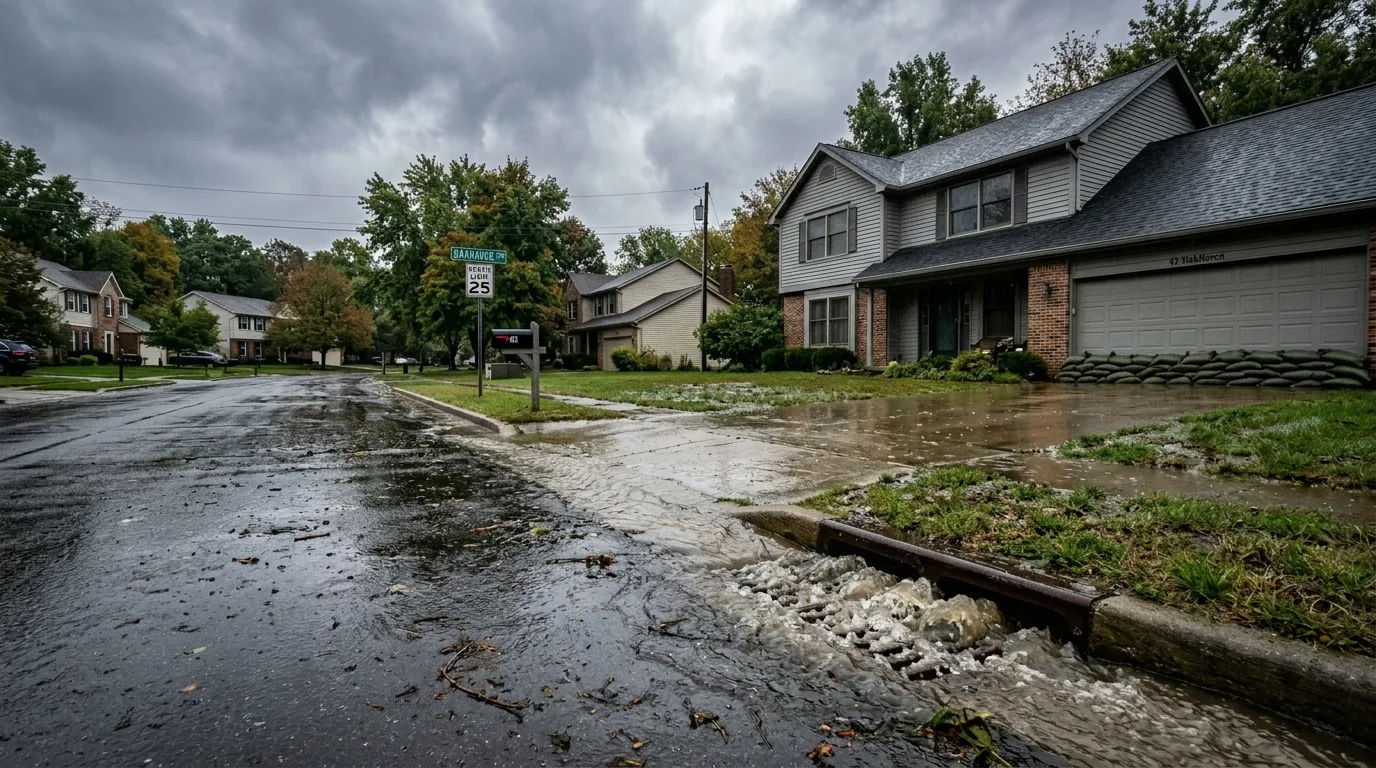
Atascocita sits closer to the Lake Houston dam and spillway than any other major residential community in northeastern Harris County — and that proximity defines both its appeal and its flood risk profile. Water damage in Atascocita, TX follows patterns distinct from typical storm flooding because Lake Houston itself acts as a forcing function: as the reservoir fills during major storm events, water backs up into the drainage channels and low-lying residential areas of Atascocita before any spillway release begins. Understanding this mechanism — and what it means for restoration — is essential for the roughly 100,000 residents of this unincorporated Harris County community. For the broader Lake Houston flood risk picture, see our Lake Houston flood risk guide for homeowners.
Atascocita Flooding? 24/7 Emergency Flood Damage Cleanup
Serving Atascocita, Humble, and all of northeastern Harris County. Call (877) 698-1311.
How Lake Houston Proximity Creates Unique Flood Patterns in Atascocita
Most flood damage cleanup scenarios begin with rainfall and progress toward drainage. Atascocita’s scenario often runs in reverse: lake level rises as the San Jacinto watershed fills upstream, backwater pushes through drainage channels into low-elevation neighborhoods, and then rainfall adds additional load on top of an already-elevated water table. Properties in Atascocita’s lakefront sections can begin experiencing yard flooding hours before significant local rainfall — triggered entirely by upstream watershed conditions that homeowners have no direct visibility into.
The USGS stream gauge on the San Jacinto River at Lake Houston provides real-time lake level data that Atascocita homeowners can monitor during major storm events. When the gauge shows lake levels approaching or exceeding the spillway gate threshold, downstream impact on Atascocita drainage is typically 6–12 hours away — providing actionable warning time to move valuables and prepare for controlled flooding.
This lake-level-driven flooding pattern means that many Atascocita properties receive flood water that is relatively clean initially (lake water, not stormwater runoff), but that picks up sewage, chemicals, and debris as it flows through neighborhoods. By the time restoration teams arrive, what began as Category 1 or 2 water has typically become Category 3 — requiring biohazard decontamination protocols for any porous materials that contacted the flood water.
FEMA Flood Zone Distribution in Atascocita
Atascocita’s flood zone distribution is among the most complex in Harris County. Three distinct zones apply across the community:
Zone AE (high risk, 100-year floodplain): Lakefront properties and those directly adjacent to drainage channels flowing into Lake Houston are typically in Zone AE. Flood insurance is required for mortgaged properties in Zone AE, and FEMA’s Substantial Damage rule applies — if cumulative repair costs exceed 50% of pre-damage market value, the structure must be brought into full floodplain compliance.
Zone X-500 (moderate risk, 500-year floodplain): A large portion of Atascocita’s interior residential neighborhoods fall into Zone X-500 — which means they are outside the 100-year floodplain but within the 500-year. Harvey demonstrated that “500-year” events can happen in consecutive decades in the San Jacinto watershed.
Zone X (minimal risk): Higher-elevation sections of Atascocita that are further from the lake and drainage channels carry minimal designated flood risk — but as Harvey demonstrated, FEMA maps based on historical data can understate actual event risk when a storm of extreme magnitude places water through drainage channels that exceed their design capacity.
Chronic Moisture Problems for Atascocita Waterfront Properties
For Atascocita homes directly on Lake Houston, flood risk extends beyond the dramatic acute events. Chronic moisture from elevated lake levels, high water tables, and groundwater saturation creates ongoing structural drying needs that are distinct from event-response restoration.
Crawlspace moisture intrusion is common in pier-and-beam sections of Atascocita — particularly in older waterfront homes built before modern encapsulation standards. The combination of high water table and high ambient humidity means that even during periods with no visible flooding, crawlspace relative humidity can consistently run above 80%, creating sustained conditions for wood rot and mold colonization in floor assemblies. Professional moisture assessments are warranted for Atascocita waterfront properties on an annual basis, not only in response to acute flood events.
Foundation moisture also affects slab-foundation Atascocita homes. The gumbo clay soil common throughout northeastern Harris County retains water against slab edges during wet seasons, maintaining hydrostatic pressure that can force moisture migration through foundation cracks and slab penetrations. This slow-onset moisture intrusion often presents as unexplained mold under flooring or efflorescence on interior slab surfaces — not as visible water pooling.
Atascocita Water Damage Restoration — Chronic and Acute Events
Moisture assessments, water mitigation, and full restoration for Harris County. Call (877) 698-1311.
Hurricane Harvey and Atascocita: The Scale of What Happened
Hurricane Harvey delivered a specific form of devastation to Atascocita that is still being processed years later. The combination of direct rainfall flooding, San Jacinto River East Fork overflow, and Lake Houston spillway releases meant that multiple flood sources arrived in sequence over several days — each wave adding water to homes that were already partially flooded from the previous event.
Many Atascocita homes received between 2 and 6 feet of standing water and held it for 3–7 days. At that duration, complete saturation of all porous structural materials — drywall, insulation, wood framing, flooring — is inevitable. The restoration scope for these homes was not mitigation and drying; it was demolition, mold remediation, and full reconstruction. The Hurricane Harvey flood recovery guide covers the specific restoration challenges these events created across the Houston region.
For Atascocita homeowners who experienced Harvey damage and completed restoration, there is an additional consideration: FEMA Substantial Damage determinations issued after Harvey affect how future flood damage is handled. If your property received a Substantial Damage determination, a subsequent flood event — even a modest one — triggers floodplain compliance requirements that can require elevating the lowest floor above base flood elevation.
Frequently Asked Questions
How do I know if my Atascocita property is in a FEMA flood zone?
Look up your property address on the FEMA Flood Map Service Center (msc.fema.gov). The map shows your flood zone designation, which determines whether flood insurance is required by your mortgage lender, whether the Substantial Damage rule applies to repairs, and whether a floodplain development permit is required for renovation work. Zone AE properties in Atascocita face the highest regulatory exposure. Our water damage restoration service in Atascocita includes guidance on permit requirements as part of the restoration process.
Does the NFIP cover Lake Houston spillway release flooding in Atascocita?
Yes — NFIP flood insurance covers flooding originating from sources external to your home, including controlled reservoir releases. The key documentation requirement is establishing that the water entered from outside (not from a plumbing failure or appliance leak), which your restoration contractor can help document with photos, gauge data, and timeline records. See the insurance guide for water damage and flood claims in Harris County for claim documentation specifics.
How quickly should I call for water extraction after Atascocita flooding?
Call immediately — within hours of water receding, not days. In Atascocita’s climate, every hour of delay extends the moisture saturation window and advances the mold colonization timeline, which begins within 24 hours during summer months. Atascocita’s high ambient humidity means that even after visible water is removed, residual moisture in walls and under flooring continues driving mold risk until professional extraction and drying equipment is in place. See the complete water damage restoration guide for the full recovery sequence.
Atascocita Flood Recovery — We Know Lake Houston Flooding
Call Humble Water Damage Restoration at (877) 698-1311 for immediate response.
Related reading: