Water Damage in Kingwood TX: Flood Challenges Explained
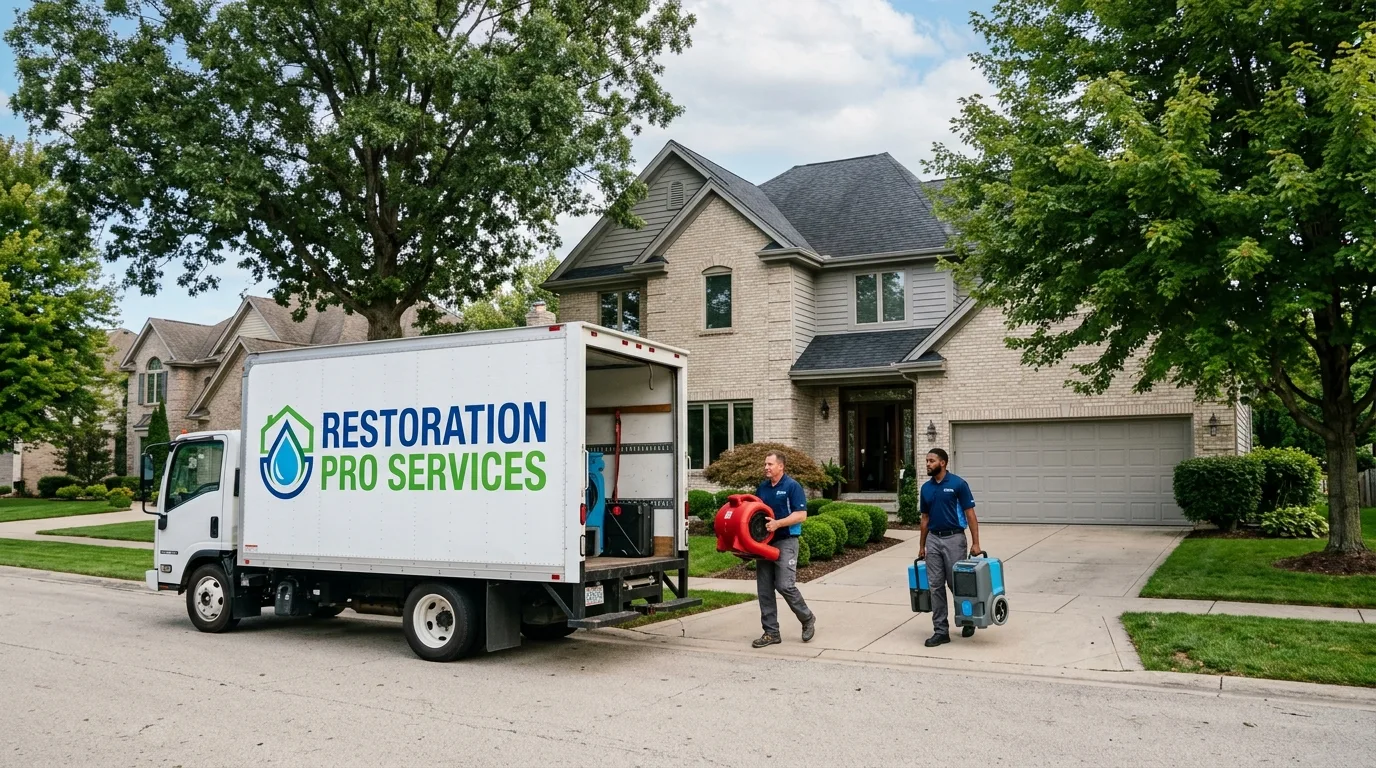
Kingwood was designed with an extensive internal drainage system — hundreds of miles of drainage channels, retention ponds, and greenbelt corridors engineered to manage stormwater for a master-planned community of 75,000 residents. Water damage in Kingwood, TX became catastrophic during Hurricane Harvey precisely because that system, designed for pre-1990s rainfall norms, was overwhelmed by 60 inches of rain in four days combined with spillway releases from Lake Houston. Understanding why Kingwood floods the way it does — and what recovery looks like in this specific community — is essential context for any Kingwood homeowner who has experienced water damage or wants to prepare for the next event. See also how Lake Houston spillway operations drive flooding in the broader Humble and Kingwood area.
Water Damage in Kingwood? 24/7 Emergency Response
Flood damage cleanup for Kingwood homes and businesses. Call (877) 698-1311.
Why Harvey Flooded Kingwood Differently Than Other Events
Hurricane Harvey’s impact on Kingwood was not simply heavy rain. The San Jacinto River’s East Fork and West Fork — which form the geographic boundaries of Kingwood — received runoff from the entire 3,900-square-mile San Jacinto watershed upstream. When the watershed filled, water backed up through those river corridors into Kingwood’s greenbelt drainage channels, reversing the normal outward drainage flow and pushing water into neighborhoods that had never flooded in decades of residency.
The spillway releases from Lake Houston added a second wave. The Army Corps of Engineers and the City of Houston, managing Lake Houston at the dam, were forced to release water into the San Jacinto downstream channel — which meant through Kingwood — to protect the dam infrastructure. Neighborhoods in Elm Grove, North Kingwood Forest, and along the Kings River drainage experienced controlled-release flooding that arrived hours after direct rainfall flooding had already begun.
This combination — watershed backup from the East and West forks plus controlled spillway releases — is what made Harvey uniquely destructive in Kingwood and distinguishes it from typical heavy-rain flooding. The flood damage cleanup required in Kingwood after Harvey was not equivalent to routine water damage restoration: many homes had 4–8 feet of standing water for multiple days, transforming what might have been a mitigation project into a full gut-and-rebuild.
How Kingwood’s Drainage Infrastructure Affects Flood Risk Today
Kingwood’s internal drainage channels — maintained by the Kingwood Community Services Association and Kingwood Utility District — drain toward the river corridors. During normal storm events, this system functions effectively. During events that saturate the surrounding watershed, the drainage channels can back up as river levels rise, effectively trapping water inside the community rather than releasing it.
Post-Harvey improvements to the San Jacinto watershed drainage — including the Kingwood Diversion Ditch project — have expanded drainage capacity. However, Kingwood homeowners in low-elevation sections near the river corridors remain in FEMA Zone AE (high-risk floodplain) or Zone X-500 (moderate risk), and the underlying geography has not changed. Checking your specific property’s flood zone designation on the FEMA Flood Map Service Center is the starting point for understanding your actual risk exposure.
What Water Damage Restoration Looks Like in Kingwood Homes
Kingwood’s housing stock spans from 1970s-era pier-and-beam homes in older sections near the northern greenbelt to contemporary slab-foundation homes in newer areas like The Groves adjacent community. These construction types respond differently to water intrusion and require different restoration approaches.
Slab-foundation homes (majority of Kingwood): Water intrusion at the slab level — through doors, wall penetrations, or rising groundwater — saturates flooring, walls, and subfloor assemblies. Professional thermal imaging inspection is the key diagnostic tool for locating moisture that has migrated into wall cavities and behind baseboards without visible surface evidence. Untreated moisture in slab-foundation homes in Kingwood’s climate leads to mold colonization within 24–72 hours.
Pier-and-beam homes (older northern sections): Water that enters the crawlspace under a pier-and-beam home creates a persistent moisture reservoir. The elevated floor system can trap water underneath for days after surface flooding recedes, sustaining wood rot and mold growth conditions in the floor assembly. Restoration requires crawlspace water mitigation and extended drying verification, not just surface cleanup.
The Insurance Claim Process for Kingwood Flood Damage
Many Kingwood properties are in FEMA-mapped flood zones and carry National Flood Insurance Program (NFIP) coverage — which was essential for the Harvey claims process. NFIP claims for Kingwood homeowners involve specific documentation requirements: the flood source must be identified as external flooding (not a burst pipe or appliance failure), and coverage limits differ for structure versus contents.
The insurance claim restoration process for Kingwood homes typically involves three separate parties: the NFIP adjuster (for flood coverage), your homeowners insurer (for non-flood water damage or additional coverage), and your restoration contractor (who documents the damage for both). Working with a restoration company experienced in Harris County NFIP claims — who can provide the scope of work documentation adjusters require — materially affects claim outcomes. See the insurance coverage guide for Humble and Harris County water damage for documentation specifics.
Kingwood Water Damage Restoration — Insurance Specialists
We document damage for both NFIP and homeowners insurance claims. Call (877) 698-1311.
Frequently Asked Questions
Is my Kingwood home at risk even if it didn’t flood during Harvey?
Yes — Harvey was not a representative event, but properties that didn’t flood during Harvey can still be in flood zones or at meaningful risk during future events. Some Kingwood neighborhoods that flooded during Tropical Storm Imelda (2019) had not flooded during Harvey. Flood risk depends on your specific lot elevation, proximity to drainage channels, and the event’s rainfall distribution. Check your current flood zone designation and consider an elevation certificate if you’re buying or selling in a Kingwood flood-adjacent neighborhood.
How long does water damage restoration take for a Kingwood home after a major flood?
For homes with significant flooding — multiple rooms, wall and subfloor saturation — the typical timeline is: 3–5 days for water extraction and initial drying, 5–10 days for complete structural drying verified with moisture meters, 1–2 weeks for mold assessment and any necessary remediation, and 4–12 weeks for reconstruction depending on scope. The Kingwood flooding events following Harvey took many homes 6–18 months to reach fully restored condition, partly due to contractor capacity constraints in Harris County. Starting the process immediately — calling for water extraction within hours of flooding receding — is the single most important factor in reducing total restoration time and cost.
Do I need flood insurance in addition to homeowners insurance in Kingwood?
If your property is in a FEMA Zone AE or Zone X-500 designation, flood insurance is strongly recommended regardless of mortgage requirements. Standard homeowners policies exclude flood damage — flooding from external water sources (rivers, spillways, storm surge) is explicitly excluded. Our water damage restoration service in Kingwood includes working with both NFIP adjusters and homeowners insurers to coordinate documentation across both claims. See the complete water damage restoration guide for the full restoration context.
Kingwood Flood Damage Experts — We Serve the Full Community
Call Humble Water Damage Restoration at (877) 698-1311 for 24/7 emergency response.
Related reading: