Burst Pipes in Humble TX: Emergency Steps While You Wait
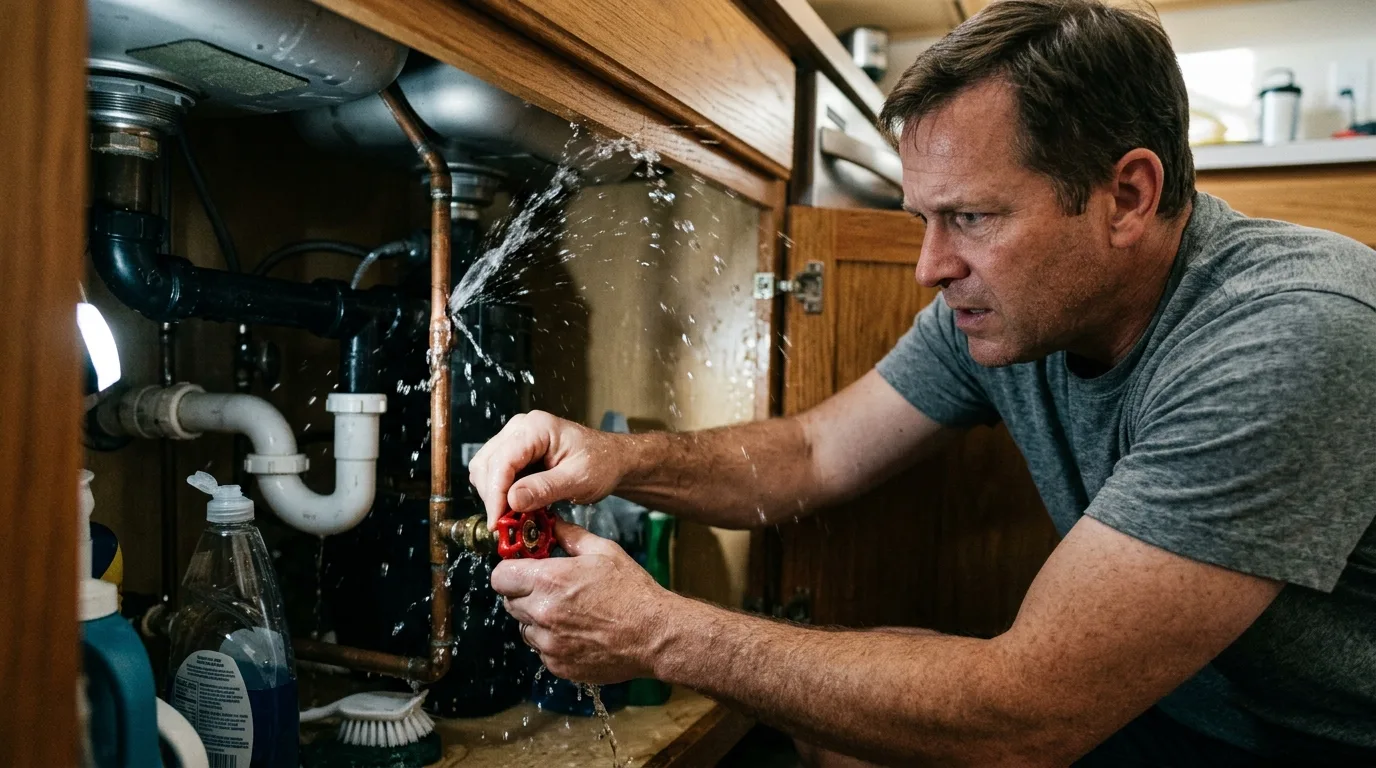
A pipe just burst in your Humble home. Water is flowing and you have minutes, not hours, to limit the damage. The decisions you make in the next 15 minutes will materially affect how extensive the damage becomes — and how much your restoration will cost. This guide gives you a clear, prioritized action sequence. Follow it, then call (877) 698-1311 for immediate professional water mitigation. For comprehensive background, see the complete water damage restoration guide for Humble and our guide on preventing burst pipes from winter freezes.
Pipe Burst? Call Us Now — 24/7 Emergency Response
Every minute matters. Humble Water Damage Restoration responds across Harris County. Call (877) 698-1311.
Why Immediate Action Matters in Humble
At full municipal water pressure (50–80 PSI), a burst 1/2-inch supply line can flow 3–8 gallons per minute. In 10 minutes, that’s 30–80 gallons — enough to saturate wall cavities, subfloor assemblies, and adjacent rooms before you’ve finished mopping the floor. In Humble’s humid subtropical climate, that saturated wood and drywall is on a 24–72 hour clock before mold colonizes.
The actions in the next 15 minutes determine whether this is a $2,000 cleanup or a $15,000 reconstruction project.
Step 1: Shut Off the Water Supply Immediately
Your first action is always to stop the water source. Every Humble homeowner should know where their main water shutoff valve is located before an emergency occurs.
Main shutoff locations: Most Humble homes have the main shutoff valve at one of these locations: inside the home near where the main water line enters (often in the utility room, garage, or under a bathroom sink), in the front yard near the water meter, or at the water meter box at the street. The street shutoff requires a meter key tool — if you don’t have one, go to your interior shutoffs first.
Individual fixture shutoffs: If the burst is from a toilet supply line, washing machine supply line, or under-sink supply line, those fixtures have individual shutoff valves. Turn these off first — they’re faster to reach and stop the flow at the source.
Once the water is off, the immediate crisis stops. Now you have time to work through the next steps systematically.
Step 2: Turn Off Electricity in Affected Areas
Water and electricity are a life-threatening combination. If the burst pipe has caused water to contact electrical outlets, light fixtures, or appliances, turn off the circuit breakers for affected areas at the electrical panel before entering those spaces. If you’re uncertain which circuits are affected, turn off the main breaker.
Do not re-enter water-affected rooms with power on until a professional has confirmed it is safe to do so. If you hear crackling sounds, see sparking, or smell burning, exit the building and call 911 before calling anyone else.
Step 3: Call Your Restoration Company and Insurance
Call (877) 698-1311 immediately. Do not wait to assess the full damage, take photos, or figure out what caused the pipe to burst. While you’re making these calls, water is continuing to absorb into structural materials. Professional extraction equipment removes water far faster and more completely than consumer shop vacs or towels — every minute before our team arrives is additional saturation.
Call your insurance company simultaneously or immediately after calling us. Get a claim number. You do not need insurance pre-approval to begin emergency water extraction — waiting for approval approval will result in additional damage that may then be considered “preventable” by the adjuster.
Step 4: Remove What You Can Safely Move
While waiting for our team, remove portable items from water-affected areas — furniture, area rugs, boxes, electronics, clothing. Wet furniture sitting on a wet floor prevents the floor from drying and can cause permanent staining. Rugs trap moisture against flooring and dramatically slow drying.
Do not remove wet materials that are attached to the structure (carpet, baseboards, drywall) — leave these for the professional crew. Our team will assess what can be dried in place and what requires removal, and documenting the pre-removal condition is important for your insurance claim.
Step 5: Document Everything
Take photos and video of all water-affected areas before any cleanup or drying begins. Photograph:
- The source of the burst pipe
- All standing water
- Visible wet materials (walls, floors, ceilings)
- Any personal property affected
- The water shutoff you used and when you shut it off
This documentation is critical for your insurance claim. Adjusters increasingly require photographic evidence of the pre-remediation condition to approve claims.
Types of Pipe Failures in Humble Homes
Freeze failures: Despite Humble’s warm climate, winter cold snaps — most dramatically the February 2021 Winter Storm Uri — cause widespread pipe bursts in homes not built for extended freezing temperatures. Attic pipes, pipes in exterior walls, and pipes in unconditioned garages are most vulnerable.
Supply line failures: Braided steel supply lines for toilets and washing machines have a typical lifespan of 5–8 years. Old plastic supply lines fail faster. These small-diameter lines run at full water pressure and can release significant water volumes quickly.
Corrosion failures in older homes: Homes in Humble proper and older Kingwood neighborhoods may have copper or galvanized plumbing approaching end-of-service life. Pinhole leaks in copper pipe are common in Harris County due to slightly acidic water chemistry.
Slab leaks: Pipes beneath concrete slabs can develop slow leaks from soil movement — Humble’s gumbo clay creates mechanical stress on underground pipe joints. These typically present as unexplained hot spots on flooring, high water bills, or mold appearing under flooring with no obvious surface water source.
Frequently Asked Questions
How do I find a hidden pipe burst if I can hear water but can’t see it?
Listen for the sound of flowing water inside walls or under floors. Check water meter movement when all fixtures are off — if the meter is moving, water is flowing somewhere. A professional water damage restoration team with thermal imaging cameras and acoustic leak detection equipment can precisely locate the source even when it’s hidden in walls or under slabs.
Can I use my shop vac to start cleanup before the restoration team arrives?
You can use a shop vac to remove standing water from hard floors — this is helpful and will reduce immediate spread. Do not attempt to dry wall cavities, subfloor assemblies, or carpeted areas with consumer equipment. Professional extraction equipment operates at significantly higher suction power and removes water from materials that shop vacs cannot reach. The most important actions are shutting off the water, calling us, and documenting the damage.
Does water damage get worse overnight?
Yes, significantly. Water that sits overnight saturates deeper into structural materials, increases mold risk, and begins causing secondary damage like swelling wood, warped flooring, and ceiling sag. If the burst occurs at night, call (877) 698-1311 immediately — our 24/7 emergency line is always staffed and we respond to Harris County emergencies at any hour.
Burst Pipe Cleanup — 24/7 Response Across Humble
Call Humble Water Damage Restoration at (877) 698-1311 for immediate emergency water mitigation. Serving all of Harris County.
Related reading: